

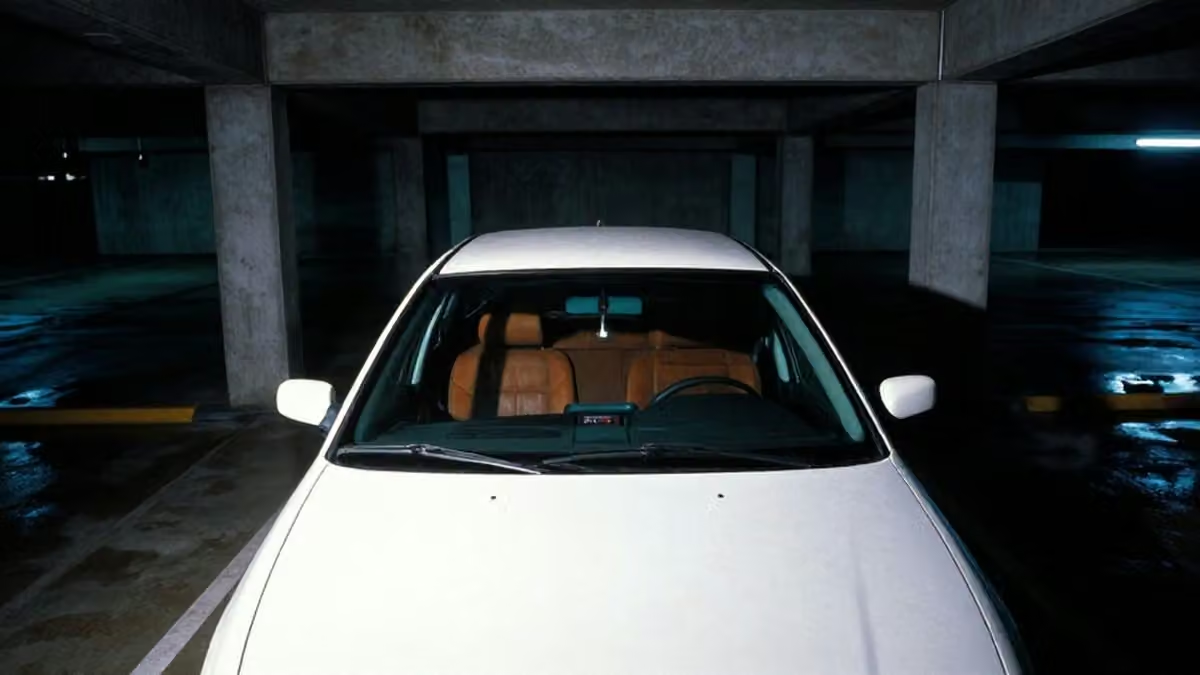
A five-year-old was in the back seat when plainclothes officers fired at his father’s vehicle in New York. Markwayne Mullin says ICE agents did not know the child was there. That claim does not make the most basic question go away: how did officers approach a car with a child inside and open fire?
The man, Oscar Belgal, was shot in the neck during an attempted arrest in the Marble Hill area of the Bronx, according to officials. The child was not hurt. Federal officials say Belgal drove into government vehicles and moved toward officers. They say the officers believed they faced danger when they fired.
There are two accounts of how that moment unfolded. New York City Police Commissioner Jessica Tisch said a plainclothes officer approached the car with a gun drawn as Belgal was pulling into a parking space. She said he began to move the car forward, and at least one officer fired seven rounds. Mullin said the officers identified themselves and gave lawful orders.
Those details matter. So does the child.
Mullin put the blame on Belgal, saying the father knew his son was in the car. That may be part of the account investigators examine. It does not answer whether the officers knew, or could have known, a five-year-old was sitting behind the driver. Mullin says they did not. That remains a claim, not a settled finding.
The room around this story has split along familiar lines. Some of the anger is aimed at ICE and the choice to fire into a vehicle with a child inside. Others point to the government’s account that Belgal drove into vehicles and toward officers. There is a sharp, almost weary impatience in the demand for proof: not another label for the man in the car, but a clear record of what officers saw and did.
Mullin’s words have sharpened that divide. He has called Belgal a threat and argued that the public should focus on the danger he created for his son. He has also said ICE will not pause its work in New York. That answer may satisfy people who see the shooting as a justified response to a threat. It is unlikely to reassure people who want to know how a child can be present at an armed stop without changing the risk calculation.
There is a difference between explaining why an officer fired and showing that the choice was safe. The first question is about what the officer believed in a fast-moving moment. The second is about the way the stop was planned, how the officers approached, what they could see, and what rules guided their decision. The public account has not resolved all of that.
The visible disagreement is not a substitute for evidence. But it shows why the evidence matters. One side hears that a dangerous driver put a child at risk. Another hears that federal officers in plain clothes approached a car and fired while a child was inside. Those accounts may overlap in some places. They do not yet settle the central question about what the officers knew.
Mullin said officers wore body cameras and that they were on during the incident. He has not said when the footage will be released. That leaves a basic test ahead: whether the video and the investigation can show what happened before the shots, not only what officials say happened after them.
A child was there. That fact is not a footnote to an argument about immigration policy, criminal records, or city cooperation with federal officers. It is the condition that makes every disputed detail urgent. If officers did not know he was in the car, the public still needs to know what they did to check. If they did know, the question is harder still.
I do not think certainty should be performed before the evidence is public. But the burden now is on the people who fired and the officials defending them to give a full account. Until then, the unanswered part is not abstract. It is whether the next child in the back seat will be seen before anyone pulls a trigger.
More on: News