

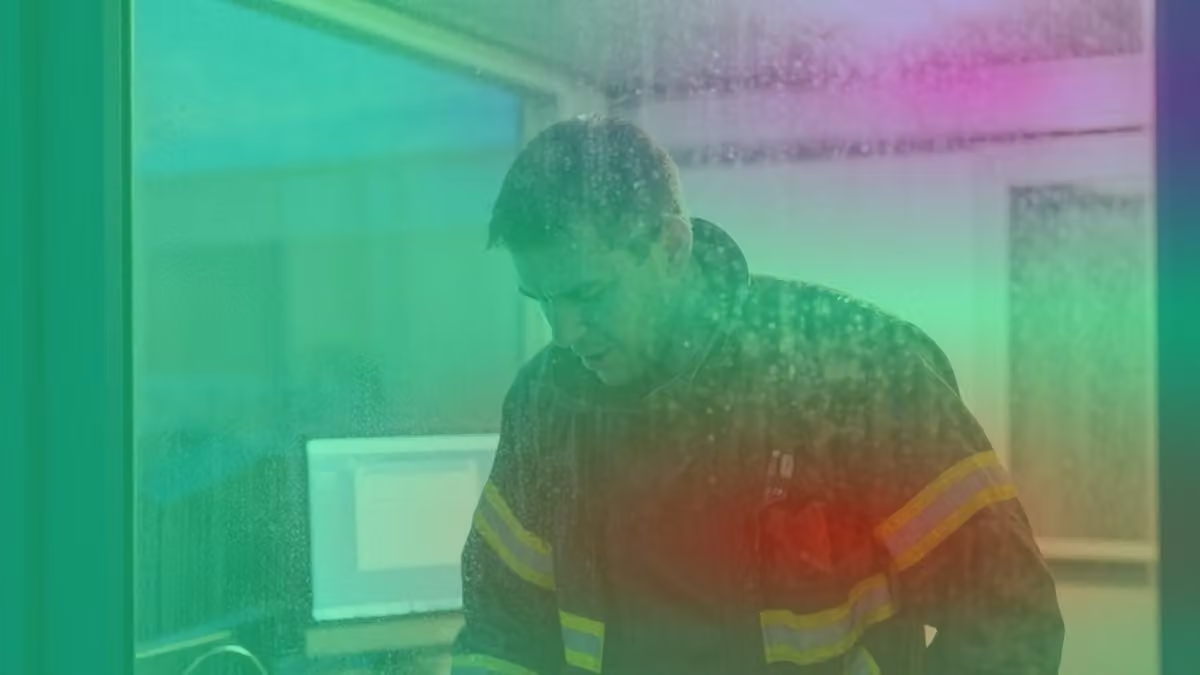
Four Canadian soldiers went out for live-fire combat training. A grass fire was burning about a kilometre away. Officials believed it was contained. Then the wind changed.
By the time it was over, four service members were dead. Thirty-nine people were injured. Nineteen were critically injured. The fire had reached the soldiers within roughly 30 seconds to a minute, according to Maj.-Gen. Wade Rutland, commander of the 1st Canadian Division.
The place was Canadian Forces Base Wainwright in Alberta. The soldiers were from 3rd Battalion, Princess Patricia’s Canadian Light Infantry, along with army reservists. They were training with live munitions at a grenade range and an attack range.
What officials say happened
Rutland said range control knew about the fire for hours. The decision was that it was sufficiently under control for training to continue. “military officials knew about the fire for hours,” he said.
Then the wind shifted. The fire moved toward the training area with unusual speed. Rutland said a commander on the ground described soldiers seeing no fire, then having flames on top of them within 30 seconds to a minute.
That is the detail that makes this hard to put down. A kilometre is not close, in ordinary terms. But on dry prairie ground, with strong and shifting wind, it became no distance at all.
The fire began at about 4 p.m. Saturday. Officials later said it was contained, with help from local authorities. The cause remains under investigation.
The question underneath the grief
The immediate public reaction has been grief, then a harder question: why did training continue while a fire burned nearby for hours?
That question is fair. It does not require assuming bad faith. It does not require pretending that every fire can be predicted. It asks something simpler: what standard was used to decide that soldiers should keep training near an active grass fire?
The military’s account is that officials believed the fire was contained. The documented fact is that they knew it had burned for hours before the wind shifted. Those two facts can both be true. Together, they still leave a painful gap between what was believed and what happened.
Canada has deployed 50 investigators to examine what happened. Prime Minister Mark Carney confirmed that number. Their job will include the fire’s cause, but the more urgent question is the chain of judgments that allowed training to proceed.
The speed changed everything
Wildfire experts told CBC that conditions at Wainwright that afternoon were extreme. Strong winds, shifting direction, and dry conditions can turn a grass fire into something that moves faster than people can react.
That matters. It means the soldiers were not simply caught by a slow, visible danger. They were caught by a fast one. Rutland said it is not normal for a fire to move a kilometre in 30 to 60 seconds.
But speed does not erase the earlier decision. It explains why the outcome was so severe. It does not explain why the risk was accepted in the first place.
Military training is built around controlled danger. Grenades, live ammunition, simulated attacks: these are dangerous because they are meant to prepare people for worse danger. The whole system depends on control. A fire nearby is not automatically a reason to stop. But it is certainly a reason to keep asking whether the control is real.
Four names, not four numbers
The soldiers who died were Sgt. Morgan Wong of Edmonton, Pte. Shaun Farrell of Prince Albert, Saskatchewan, Pte. Aidan Goulding of North Vancouver, and Pte. Hayden Lykkemark of Langley, British Columbia.
Their names have been shared publicly. That matters. It is easy for a story like this to become a set of figures: four dead, 39 injured, 19 critical. Those numbers are exact. They are also people with families, units, plans, and lives that stopped on a training range.
The injured are still being treated. As of Monday, 33 military members remained in hospital, according to Canada’s defence minister. Some face surgeries and skin grafts. Recovery will not be quick.
What should happen now
The investigation needs to answer clearly. What information did range control have? What thresholds trigger a pause or evacuation? Who had authority to stop training? Was the fire’s movement monitored continuously, or was “contained” treated as a fixed status?
Those are not abstract questions. They are the difference between a close call and a catastrophe.
I do not know what the investigation will find. No one should pretend to know yet. But the public should expect specifics, not only condolences. The military owes the families a full account of why soldiers were training while a fire burned nearby for hours.
The wind shifted. The fire moved. Four soldiers died. The least owed to them now is a clear answer about what could have been done differently.
More on: News